
On Being a Beginner
Caddis flies, familiar waters, forgotten bylines, and accidental double emails

Speaking of “on being a beginner,” I accidentally uploaded this to my personal channel, not the Discard Pile. Oops. Here it is here, where it was always supposed to be.
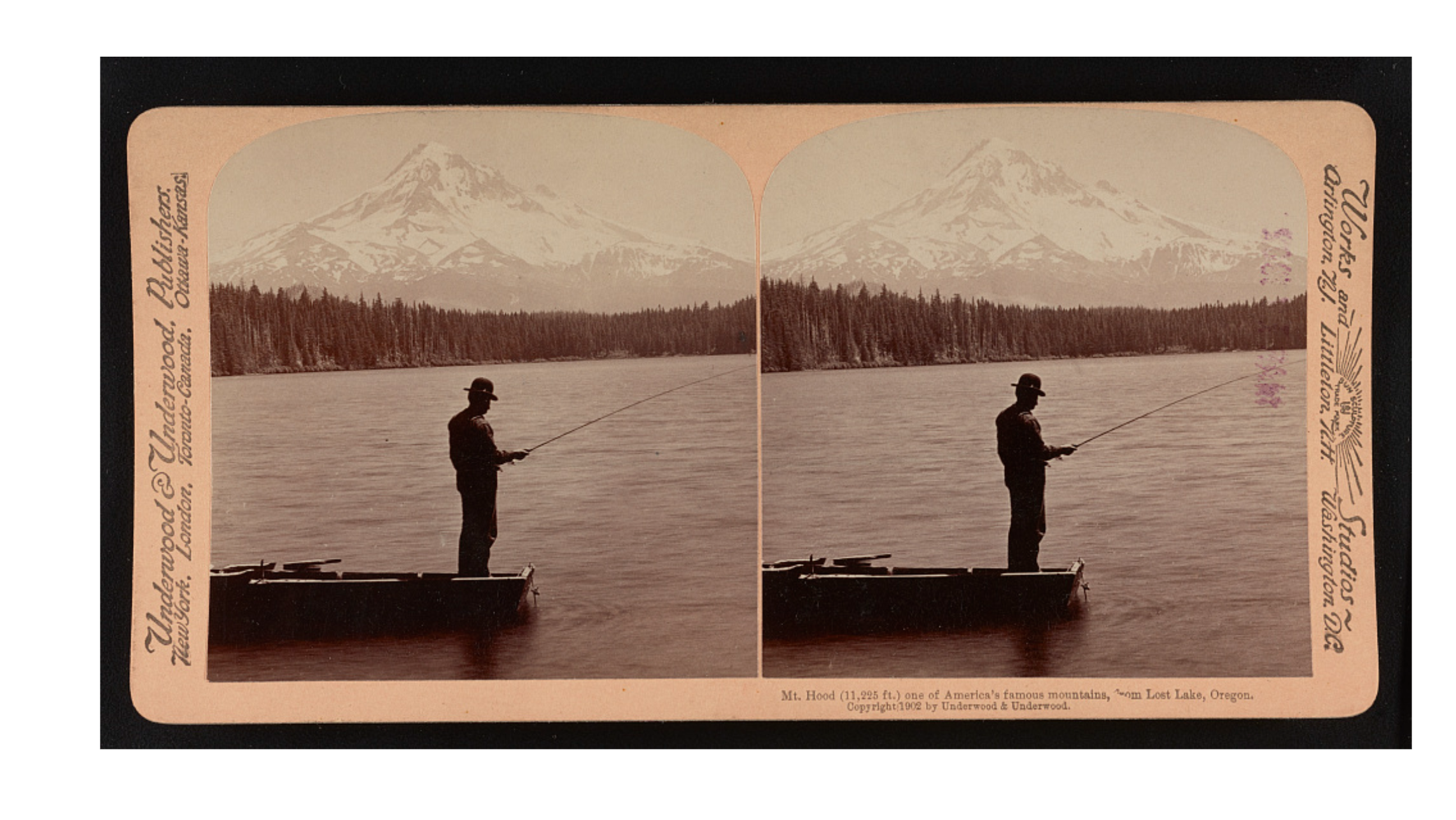
I was eavesdropping in a Northern Michigan fly shop. Fly fishing is new for me; despite years of obsessively reading books about trout, owning a rod and reel, and literally living on a lake1, it took a work trip to North Carolina and a patient butcher for me to attempt an actual cast.
I hate being an amateur, even though that’s what I am at most things. But I hate the feeling. In expert spaces, around real surfers and anglers and small engine mechanics, I find myself accidentally posturing, which is worse, obviously. It’s proving the old Lincoln quote, “It is better to remain silent and be thought a fool than to open one’s mouth and remove all doubt.” From my pathological need to be seen not as a fool, I often remove all doubt.
Curiosity and honesty and a willingness to embrace discomfort are a better house to live in. That’s the only way to learn something. In the posturing of false knowledge, we reveal more about our inner character than any original ignorance. We all start somewhere; it might as well be here.
My friend Julian does this well. He’s joked that it’s his special skill: comfort at being a beginner or, more to the point, being okay at being bad at things. I’ve seen it manifest in the same expert places that I struggle: climbing gyms, Indonesian surf breaks, corporate all-hands meetings. He’s unabashedly curious, willing to follow up on things he doesn’t understand. It’s not social ineptness; Julian is intuitive, wildly fun, and easily reads the flow of a room. He’s just not afraid to pause briefly in search of deeper understanding. It’s to his and everyone’s benefit.
For years now, WWJD2 has been a private mantra in new situations where I confront being a beginner. I’m trying, and I’m getting better, but not always. It doesn’t help that the writing life involves flinging yourself into the unknown with frequency. Here, we’re all constant beginners, no matter our previous track record or publications. Each blank page we start anew.
In the fly shop, I failed. Maybe because I walked in wearing a $400 Filson-issued Stetson, its own kind of posturing. I dallyed and I eavesdropped as I pretended to shop for nymphs and streamers and pretended to know the difference between each without surreptitiously Googling. The fly shop employee chatted amiably and informatively with a new-to-town angler, asking what was biting and where. He used terminology I was barely tracking with, until he started talking about the Manistee River.
The Manistee is familiar waters. A two-day backpacking loop stretches around the lower stretch of the river, sharing blazes with the Midwest’s own through-hiking crown jewel: the North Country Trail. I backpacked it first as a 19-year-old, and like a magnetic pole, it’s drawn me back again and again. Bekah and I had an early date there, where I cooked and ate enough instant stuffing for four people, and then we scandalously shared a tent. Later, I proposed on a bluff overlooking the river. I’ve canoed it both upstream and down, run the full 24-mile loop in an ambling birthday challenge, mapped and rode and wrote about a bikepacking route tracing the river from its headwaters to the Big Lake itself.
The moment the fly shop expert began describing the river’s curves and various features, access points south of the Hodenpyl dam, deep holes to avoid wading into, everything clicked into a sense of understanding. Unfamiliar terms were made familiar, defined by a known landscape and the relativity of memory. Yes, that’s the spot where I tied a bottle of Tullamore Dew to cool on a summer’s evening, that’s the spot where I, full of Abbey-esque righteous rage, accosted a stranger for cutting down a protected pine, that’s where the current swept a half-empty aluminum canoe downstream, regardless of my paddle strokes. The new language of fly fishing merged with an inherent understanding of place. In other words, things clicked. The river, and our long history, provided the answers.
To use an older, and even more cliché-approaching quote than that Lincoln one, Heraclitus said that no man ever steps in the same river twice, for it’s not the same river and he’s not the same man.3 I read that in a fantasy book about two magicians crossing the mythical Lethe, not in its original Greek, if that helps limit the pretension. This is, after all, the same man who said the only constant was change, a favorite aphorism of LinkedIn bros with AI-generated statuses each treats as a TED talk audition. But someone had to think of it first. Change is constant; the river is both familiar and unknown; Schroedinger’s trout is both hooked and swimming free. I’d like to try to revisit the familiar waters as a familiar yet new man, humble enough to say, I’m not very good at this, but I’d like to try.
At the fly shop, I bought a map, mostly kept my mouth shut, and signed up to be on the email list for a seasonal casting clinic. Not perfect, but a decent first step.
In an unplanned bit of byline synchronicity, Huckbery just published a collection of 30 Things To Know Before You Turn 30. A collection of wise and pithy advice from the likes of Sinuhe Xavier, With Egg Salad On My Tie, and Nicholas Triolo. My contribution4, written three weeks before this post and then promptly forgotten, was to “embrace being a beginner.” Maybe I should take my own advice.
Not anymore, but adding a time qualifier there ruined the flow of the sentence. Please accept my fib of omission. It is a fishing story after all.
“What would Julian do?”
This too should probably be in quotes, but after a few thousand years, maybe your words just belong to everyone.
In which David Grivette generously describes me as a “fly fisherman,” to which I would add the prefix “attempted”
This has happened to me so many times when fishing in a new area, for a new species, trying a new method, etc etc. I'll walk into a bait shop, ask a few shallow questions that try to glean intel but not betray that I'm a total noobie-- and everyone will immediately know that it's a facade.
Meanwhile, the times when I walk in comfortably a beginner are the times I learn the most. Generally people want to help you learn, you just have to admit to yourself that you don't know what you're talking about, and show that you really care to learn. It's the difference between walking out of the store feeling like an idiot, or a beginner. One is deflating, the other is motivating. Thanks for the reminder!